Anpassade DTH-borrstänger: Specialiserad teknik för högeffektiv borrning
In mining, geotechnical engineering, and geological exploration, the DTH drill rod is a core drilling component, and its performance directly affects both productivity and cost. As project requirements become more diverse, standardized rods are often no longer enough for complex conditions. As a result, custom DTH drill rod solutions are becoming an industry norm. This article outlines the key technical aspects of customization and explains how professional design can improve overall drilling performance.
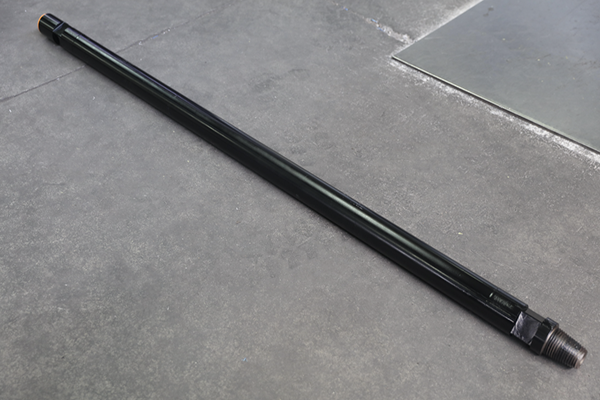
Core Functions and Technical Requirements of DTH Drill Rods
A DTH drill rod must perform under combined high-impact loading and rotational friction. Its key functions include transmitting impact energy, delivering compressed air, and maintaining borehole alignment. Effective customization typically focuses on three dimensions: material selection, structural design, and process control.
Material selection: High-grade alloy steel is fundamental, with high strength, fatigue resistance, and wear resistance. Some custom options use advanced surface treatments; for example, tungsten carbide coatings can significantly increase surface hardness and service life.
Structural design: Joint-to-body connection strength is critical. Customization can adapt thread profiles (such as R-type or T-type) for different formations, optimize flushing-groove geometry to reduce sticking risk, and strengthen critical sections through processes such as medium-frequency quenching.
Process control: Precision quench-and-temper treatment balances toughness and hardness, while friction welding ensures a robust, continuous bond between joint and rod body, minimizing impact-energy loss.
How Custom Rods Address Common Field Challenges
Standard rods often struggle in difficult geology, leading to borehole deviation, rod failure, or low drilling efficiency. Custom solutions overcome these issues through targeted engineering.
Adaptation to complex formations: For hard rock, fractured zones, or highly abrasive strata, custom rods can adjust body diameter-to-wall-thickness ratios to improve impact transmission. In hard granite, for example, thicker-wall designs provide stronger impact resistance.
Higher operational efficiency: By optimizing flushing-groove angle and depth, custom rods can evacuate cuttings faster and reduce regrinding. Lightweight concepts, such as hollow structures, lower equipment load and increase penetration speed.
Longer service life: Surface nitriding or laser cladding can create wear-resistant protective layers, significantly reducing wear in high-quartz formations. Some custom designs also include replaceable bit interfaces to reduce maintenance cost.
Key Factors When Selecting a Customization Service
Custom DTH drill rods should be engineered from actual jobsite conditions. The following factors are essential:
Geologisk datakvalitet: Formationens hårdhet, integritet och vattenhalt bör anges. I kraftigt sprickiga formationer är till exempel förbättrad böjmotståndskraft nödvändig för att minska klibbning och fastklämning.
Utrustningskompatibilitet: Stångens ytterdiameter och anslutningsgängor måste matcha kompressorns och borriggens specifikationer. Kundanpassade tjänster kan justera kopplingsdimensionerna för tillförlitlig integration.
Verifiering av tillverkningskapacitet: Utvärdera om leverantören har kärnkompetens inom värmebehandling och precisionsbearbetning. Friktionssvetskvaliteten är särskilt viktig eftersom svetshållfastheten direkt påverkar stångens livslängd och bör valideras genom ultraljudsinspektion.
Fälttillämpningar och praktiska insikter
I ett dagbrottsprojekt använde en operatör specialanpassade förlängda borrstänger (över 12 meter) för djuphålssprängning och ökade djupet med 40 % vid tunnelbyggnation. Vid tunnelbyggnation minskade en specialanpassad stång med variabel diameter, utformad för alternerande mjuka och hårda lager, effektivt borrhålsavvikelsen. Dessa exempel visar att exakt anpassning kan minska byggrisken och förbättra resursutnyttjandet.
Anpassade DTH-borrstänger handlar inte bara om att ändra dimensioner. De är systemnivålösningar som integrerar materialvetenskap, mekanisk design och tillverkningsteknik för specifika driftsförhållanden. Genom att välja en tillverkare med stark FoU-kapacitet – och basera designen på rigorösa geologiska och utrustningsdata – kan operatörer uppnå både högre borreffektivitet och bättre ekonomisk prestanda.