Hur man gasar spräckningsutrustning för gruvprojekt
How to Select Gas Fracturing Equipment for Mining Projects
Selecting gas fracturing equipment involves more than comparing advertised specifications. Buyers need to determine whether a system suits the rock conditions, work environment, and production goals, while also reviewing reliability, maintenance, safety documentation, and supplier support.
The following guide turns common equipment-selection questions into a practical procurement framework. Specifications cited in general articles should be verified against current technical documents for the exact model and should not be assumed to apply to Yantai Gaea.
1. Match performance to the application
Start by defining the intended work and reviewing the equipment’s drilling capability, power, compatible components, and stated operating range. A specification is meaningful only when it matches the geology, work method, and other equipment at the site.
Ask suppliers for formal technical data, test conditions, and application limits. Qualified personnel should assess whether the proposed equipment fits the project. A mismatch can affect drilling productivity, downstream fragmentation, schedule, and total cost.
2. Evaluate materials and component reliability
Drill tools, impact components, and connections can face repeated impact, abrasion, and demanding site conditions. Reliability assessment should include more than a material name. Review manufacturing information, design of critical parts, inspection requirements, replacement-part availability, repair timelines, and evidence from comparable applications.
Request written warranty terms and confirm which specific model and components they cover. General claims about material strength or equipment life do not establish long-term reliability by themselves.
3. Consider weight and site handling
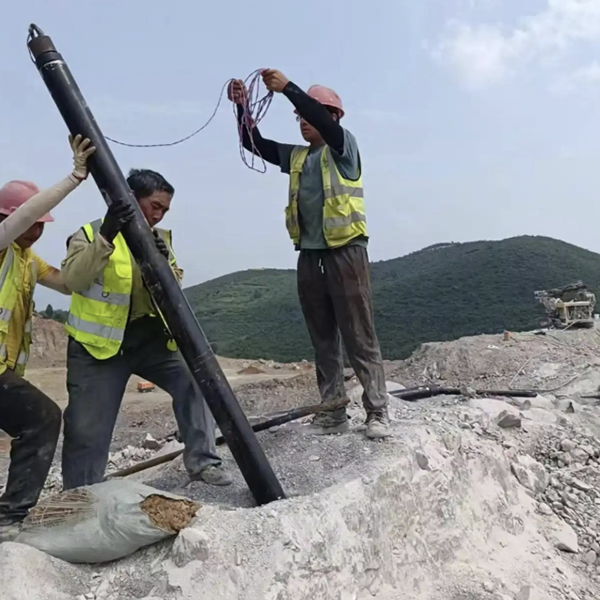
Equipment weight affects structural design, transport, installation, and crew handling. Lighter equipment is not automatically better, and heavier equipment is not necessarily more durable.
Assess access routes, available lifting or handling equipment, underground or surface-space limitations, and safe work practices. The system should be practical to move and position under the conditions expected at the site.
4. Review energy supply and work continuity
For equipment that relies on batteries or another energy source, examine recharge or replenishment time, operating cycles, backup arrangements, compatibility with site infrastructure, and manufacturer requirements.
Actual productivity also depends on temperature, workload, maintenance, and shift planning. Avoid estimating output from a single advertised recharge figure.
5. Verify the intended use and compliance status
Broad descriptions such as “for the blasting industry” do not establish suitability for a particular mine or tunnel. Buyers should confirm the intended application, site limitations, protection ratings, and any required certifications.
Kontrollera att dokumenten gäller för den exakta modellen och den planerade driftsmiljön. Underjordiska, ovanjordiska och begränsade platser kan ha olika reglerings- och säkerhetskrav. Oklara certifierings- eller tillämpningsgränser kan försena driftsättningen eller kräva kostsamma förändringar.
6. Undersök systematiskt inkonsekventa resultat
Variationer i resultat kan vara relaterade till utrustningens skick, borrkvalitet, bergstruktur, projektdesign eller samordning på arbetsplatsen. Det bör inte automatiskt tillskrivas en enda utrustningsparameter.
Projektteam bör använda godkända tekniska planer, personalutbildning och lämpliga register för att hantera arbetskvaliteten. Alla driftsparametrar för laddning, aktivering eller borrhålsdesign måste ställas in av behöriga yrkesmän med hjälp av tillämplig tillverkardokumentation och godkända projektplaner.
7. Se bortom materialpåståenden när du bedömer hållbarhet
Tillförlitlighet kan också bero på skydd mot damm och fukt, värmehantering, tillgång till service, tillgång till reservdelar och leverantörens responsförmåga.
Be om underhållskrav och bevis från långvarig användning under jämförbara förhållanden. Bekräfta att alla rapporter eller fältfeedback kan spåras till relevant utrustningsmodell.
Fatta ett livscykelbaserat upphandlingsbeslut
En sund utvärdering kombinerar prestandabevis, strukturell tillförlitlighet, platskompatibilitet, säkerhetsdokumentation, underhållsbehov och servicesupport. Köpare bör jämföra totala livscykelkostnader med hjälp av konsekventa projektantaganden snarare än att förlita sig på isolerade marknadsföringssiffror.
Yantai Gaeas nuvarande produktsortiment, specifikationer, certifieringar och supporttjänster bör bekräftas genom officiell företagsdokumentation. Att ersätta en annan leverantörs namn i en källartikel bekräftar inte att den citerade modellen eller påståendena tillhör Yantai Gaea.